
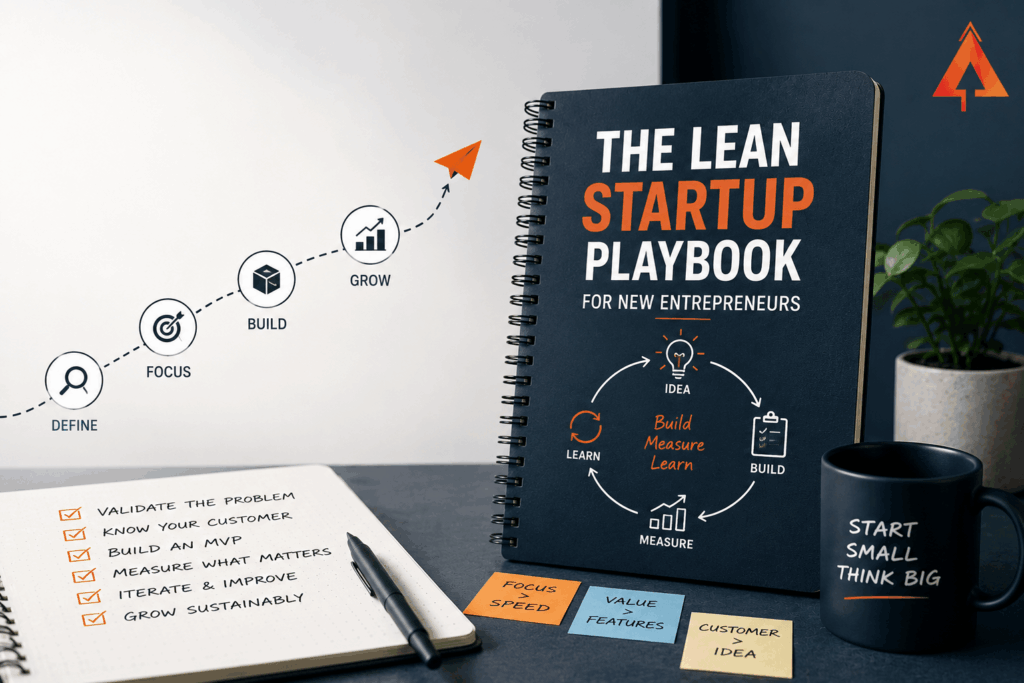
Most new founders write a business plan like they can predict the next three years. They can’t. Nobody can.
Back in 2011, entrepreneur Eric Ries wrote a book that changed how smart founders think about this problem. It’s called The Lean Startup, and the core idea is simple: a new business isn’t a plan you execute. It’s a set of guesses you test, one small step at a time, until you find something that actually works.
This matters more than ever for new entrepreneurs, because the biggest waste in a new business usually isn’t money. It’s time spent building something carefully, before anyone actually checked whether people wanted it. Here’s how the Lean Startup method works, in plain terms, with real examples you can copy this week.
Treat Your Business Like a Question, Not a Plan
Every new business starts with a bunch of guesses dressed up as facts. You guess that people want what you’re building. You guess they’ll pay what you plan to charge. You guess they’ll find you the way you expect them to.
The Lean Startup method says: stop pretending these are facts. Treat them as guesses, and test the riskiest one first, before you spend real time and money building anything big. This one shift from “I know this will work” to “let’s find out if this works” is the whole foundation everything else in this article is built on.
Build the Smallest Thing That Can Teach You Something
Ries calls this a Minimum Viable Product, or MVP. People often get this wrong. An MVP isn’t a smaller, cheaper version of your final product. It’s the smallest possible thing you can put in front of real people that tells you whether your idea actually works.
Dropbox is a famous example. Before building the complicated file-syncing technology behind Dropbox, founder Drew Houston made a simple three-minute video showing how the product would work, as if it already existed. He posted it online. Overnight, the waiting list for early access jumped from 5,000 people to 75,000. He hadn’t built the real product yet. He’d built just enough to learn that people genuinely wanted it.
Zappos is an even simpler example. Before spending money on shoe inventory, founder Nick Swinmurn took photos of shoes at local stores and put them on a basic website. When someone ordered a pair, he’d drive to the store, buy that exact pair, and ship it himself. Customers had no idea. All he wanted to know was one thing: will people actually buy shoes online? The answer was yes, and only then did Zappos build the real business behind it.
Neither of these founders waited until the product was finished. They built the smallest possible version of an answer, first.
Measure the Right Numbers
Not every number that goes up is good news. Ries makes a sharp distinction between vanity metrics and real metrics.
Vanity metrics feel good but don’t tell you what to do next. Total downloads. Total signups. Total page views. These numbers can climb every week while your actual business quietly fails, because they don’t tell you whether people are sticking around, coming back, or paying.
Real metrics tie directly to something you can act on. How many people who signed up last week are still using the product this week? Of the people who saw your offer, what percentage actually bought? These numbers are less flattering, and far more useful, because they tell you exactly what to fix.
The simple rule: before you celebrate a number going up, ask what specific action you’d take differently if it went down instead. If you don’t have an answer, it’s probably a vanity metric.
Say your app hits 10,000 downloads. That sounds great, but on its own it doesn’t tell you anything to do next. Now say you learn that of the people who downloaded it last month, only 8% opened it again a week later. That number is uncomfortable, but it’s useful it tells you exactly what to go fix.
Learn, Then Choose: Keep Going or Change Course
The heart of the Lean Startup method is a loop: build a small test, measure what actually happens, learn from it, then decide what to do next. Ries calls this the Build-Measure-Learn loop, and the point is to move through it as fast as possible, not to get each step perfect.
After every loop, you face one honest choice: persevere, meaning keep going in the same direction because the evidence supports it, or pivot, meaning change your approach because it doesn’t. A pivot isn’t giving up. It’s changing the plan while keeping what you’ve learned. Slack, for example, started as a gaming company before its founders noticed the internal messaging tool they’d built for their own team was the more interesting product a pivot, not a failure.
The mistake most new founders make isn’t picking the wrong choice. It’s refusing to make the choice honestly, and continuing to build on a guess the evidence has already answered.
Track Progress Even Before You Have Real Customers
Early on, you often have no revenue and no customers yet, which makes it tempting to feel like there’s nothing to measure. Ries argues the opposite: this is exactly when you need clear checkpoints, just different ones than a mature business would use.
Start by establishing a real baseline with your first small test actual numbers, not guesses. Then work to improve that baseline through small, deliberate changes. Finally, use what you’ve learned to make the pivot-or-persevere decision with real evidence behind it, instead of gut feeling alone. This gives you honest progress to track long before there’s a revenue chart worth showing anyone.
Never Stop Talking to Real Customers
Every step above depends on one habit underneath it: staying in direct contact with real people who might buy what you’re building. The build-measure-learn loop only works if the “measure” and “learn” parts come from real behavior, not from your own assumptions about what people probably want.
Founders who build in isolation and only check in with customers occasionally end up guessing their way through decisions that should have been tested. The ones who keep talking to real customers, constantly, catch bad assumptions early, while they’re still cheap and quick to fix.
This doesn’t need to be formal. It can be as simple as five short calls a week with real prospects, or genuinely reading and responding to every piece of feedback that comes in. The format matters far less than the habit itself staying close enough to real people that you’d notice immediately if your assumptions stopped matching reality.
The Skimmable Summary
- Treat your business as a set of guesses to test, not a plan to execute — and test the riskiest guess first.
- Build the smallest possible version of your idea that can actually teach you something, like Dropbox’s demo video or Zappos’ manual shoe test.
- Watch out for vanity metrics. A number going up only matters if it tells you what to do next.
- Use the Build-Measure-Learn loop, and move through it fast — build small, measure honestly, learn quickly.
- After each loop, choose honestly: persevere or pivot. A pivot changes the plan, it doesn’t mean you failed.
- Track real checkpoints even with zero customers — a baseline, real improvement, then an honest decision based on evidence.
- Stay in constant contact with real customers. The whole method only works if your data comes from real people, not your own guesses.
Your Next Step
Write down the single riskiest guess your business is currently resting on the one thing that, if wrong, would break everything else.
Design the smallest, cheapest possible test for that one guess this week. Not a full product. Not a big launch. A version small enough to build in days, that gives you a real, honest answer from real people.
Then actually run it, look at what happened, and make the honest call: keep going, or change direction. That one small test will teach you more than another month of planning ever could.

EntrepreneursLeague is an initiative to support startups and leading entrepreneurs with more visibility, resources, and community for growth and networking.