
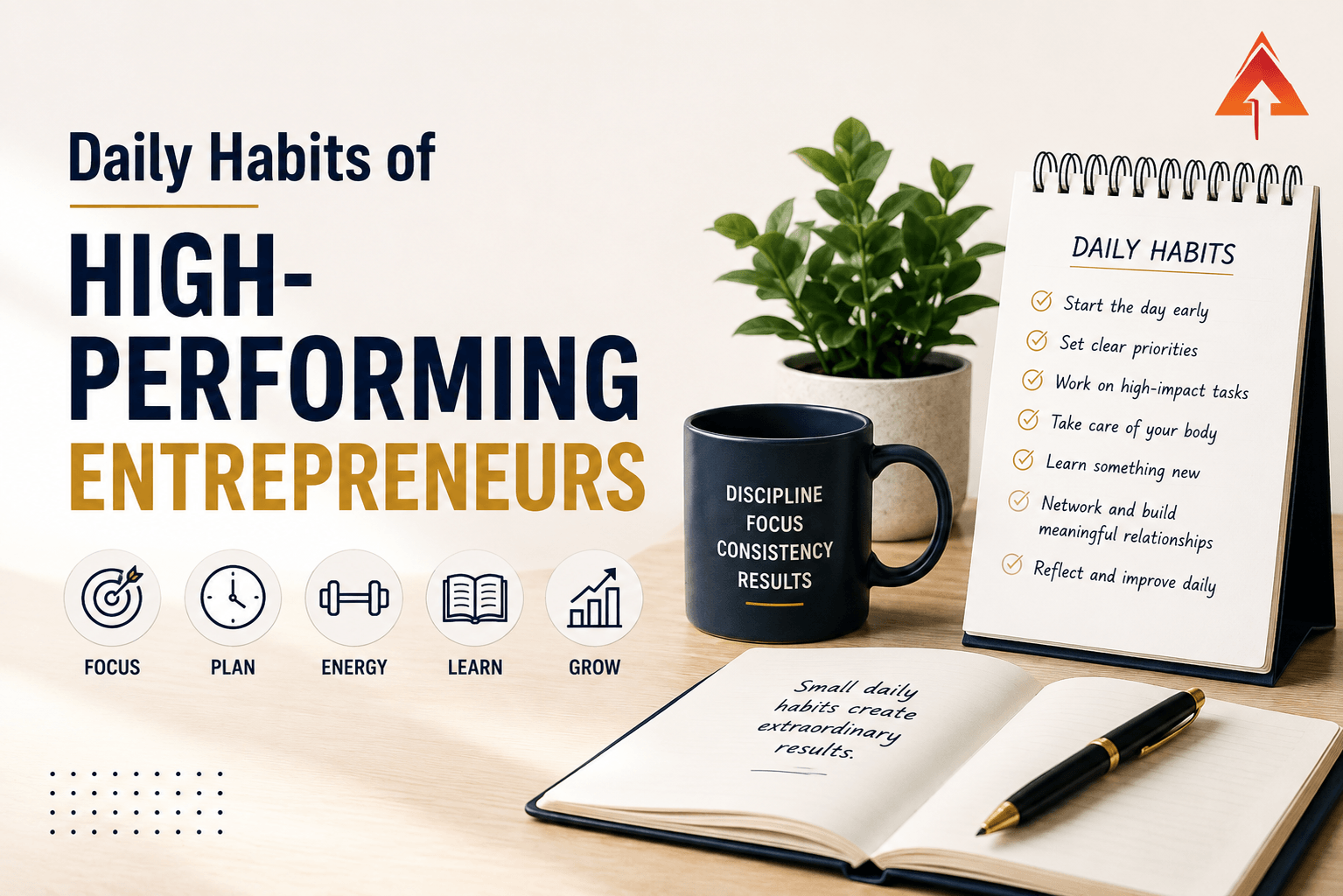
High-performing entrepreneurs are not defined by what time they wake up.
Some are up at five. Some are up at seven, having gone to bed well past midnight after a genuinely productive late-night stretch. The “5am club” obsession has convinced a generation of founders that the clock is the secret — so they set a brutal alarm, feel virtuous for a week, and burn out by the second month, no more productive than before.
What actually separates high performers isn’t a wake-up time. It’s a small set of daily habits that protect their two scarcest resources: attention and energy. Miss those, and no amount of early rising will save the day. Protect them, and the exact hour you start almost stops mattering. Here’s what the habit actually looks like, and why it works.
They Protect One Block of Deep, Undisturbed Work
High performers treat one stretch of their day — often, though not always, the morning — as non-negotiable, protected time for the work that actually requires their full brain: strategy, writing, difficult decisions, the thing only they can do. No email open. No messages. No “quick” calls.
This isn’t a preference. It’s a response to something real happening in your brain every time you switch tasks. Research by organizational psychologist Sophie Leroy identified what she called “attention residue” — when you move from an unfinished task to a new one, part of your attention stays lodged in the task you just left, measurably reducing your performance on whatever comes next. It doesn’t matter whether the switch feels big or small; checking a message mid-task carries the same cost as fully changing projects.
The habit: Block one period daily — sixty to ninety minutes is enough to start — where nothing is allowed to interrupt the one task that matters most. Not “I’ll try.” Treat it exactly like a client meeting you cannot reschedule.
Picture two founders writing the same important proposal. One works on it in fifteen-minute fragments between messages, calls, and a “quick” look at email — and finishes, exhausted, three hours later, with a document that still needs heavy editing. The other blocks ninety minutes, phone in another room, and finishes a genuinely strong draft in that single sitting. Same task. Same founder-level skill. The only difference was whether attention was allowed to fragment.
They Build a Hard Boundary Against Reactive Switching
The same research explains why a day full of “quick checks” leaves you exhausted despite accomplishing little — every check drags a piece of unfinished attention into whatever you do next, all day long, compounding as the hours go on.
High performers don’t try to have more willpower about this. They build structural boundaries instead: specific windows for checking messages and email, rather than a phone buzzing every few minutes, each time skimming off a little more of the attention their real work needs.
The habit: Pick two or three fixed windows a day for messages and email — say, mid-morning, after lunch, and late afternoon. Outside those windows, notifications stay off. The goal isn’t to respond slower out of principle. It’s to stop the constant switching that’s quietly taxing every task you touch.
They Treat Sleep as a Performance Input, Not a Luxury
Founders love to treat sleep as the first thing to sacrifice when there’s too much to do, as if exhaustion were a badge of commitment. It’s the opposite of a smart trade. Cognitive performance, judgment quality, and emotional regulation all decline sharply with insufficient sleep — meaning the extra hour you gained by staying up is very often paid back, with interest, in worse decisions and slower thinking the next day. A founder running on five hours of sleep isn’t operating at full capacity with less time available. They’re operating at meaningfully reduced capacity, for every single hour of that longer day.
High performers protect sleep the way they’d protect any input critical to the business, because that’s precisely what it is: an operating cost of a functioning brain, not an optional indulgence.
The habit: Set a fixed target bedtime and protect it the same way you’d protect a client deadline — not as an aspiration, but as a commitment you plan around.
They Move Their Body Before They Move Their Business
Physical movement isn’t a wellness add-on for high performers — it’s treated as a direct input into how clearly they think. Even brief exercise reliably improves mood, focus, and cognitive function for hours afterward, which is exactly why so many founders build some form of movement into the very start of their day, before the inbox and the decisions start pulling at their attention.
This doesn’t require an hour at the gym. The habit that matters is consistency, not intensity — a short walk, a quick workout, stretching, anything that gets the body moving before the brain gets pulled into reactive mode.
The habit: Move your body, in some form, before you open your laptop for the day. Ten minutes counts. The point is sequencing — body before inbox — not duration.
They Have One Single Non-Negotiable Priority
Ask a struggling founder what they did yesterday and you’ll usually get a long list of activity. Ask a high performer, and you’ll typically get one sentence: the single thing that had to happen, regardless of what else did or didn’t.
This habit is less about time management and more about decision-making under pressure. When the day inevitably goes sideways — and it will — having pre-decided the one non-negotiable priority means you don’t have to make that decision while already overwhelmed. You already know what wins, before the fire drills, the urgent client email, and the unplanned calls arrive to compete for your attention.
The habit: Before the day starts, name the one task that would make today a win even if nothing else got done. Protect that one thing above everything else that shows up.
They Reflect Before They Repeat
The habit most founders skip entirely is also one of the most measurable. In a well-known study from Harvard Business School and HEC Paris, employees who spent just fifteen minutes at the end of each training day writing and reflecting on what they’d learned performed 23% better on a final test than peers who used that same time to keep practicing instead. Reflection, not just repetition, is what turned the day’s experience into genuine improvement.
High performers routinely close their day with a short, honest look back: what worked, what didn’t, what they’d change tomorrow. It costs a few minutes and compounds into real skill over months, in a way that simply doing more, faster, never quite manages to.
The habit: Spend five to ten minutes at the end of each day writing down what actually worked, what didn’t, and one thing you’ll do differently tomorrow.
The Skimmable Summary
- The habit that matters isn’t your wake-up time. It’s protecting attention and energy, at any hour you choose to start.
- Protect one daily block of deep, undisturbed work — task-switching carries a real, measurable cognitive cost.
- Build fixed windows for messages and email, instead of responding reactively all day long.
- Treat sleep as a performance input, not the first thing you sacrifice when busy.
- Move your body before you open your laptop — even ten minutes changes the quality of the hours that follow.
- Decide your one non-negotiable priority before the day starts, so a chaotic day doesn’t cost you the thing that actually mattered.
- Close each day with a few minutes of honest reflection — it measurably improves how much you actually learn from your own experience.
Your Next Step
Don’t try to install all six habits tomorrow morning. Pick the one you’re currently missing entirely, not the one that sounds most impressive.
If you have no protected deep-work block, build one this week — even sixty minutes. If you’re constantly reactive to notifications, set your first fixed check-in windows tomorrow. If you’ve never once reflected at the end of a workday, try it tonight — five minutes, honestly written.
High performance was never about the intensity of a single heroic morning. It’s built from a small number of ordinary, boring, repeated habits that protect your attention and energy on the days nobody’s watching. Start with one, tonight, and let it become automatic before you add the next.
EntrepreneursLeague is an initiative to support startups and leading entrepreneurs with more visibility, resources, and community for growth and networking.